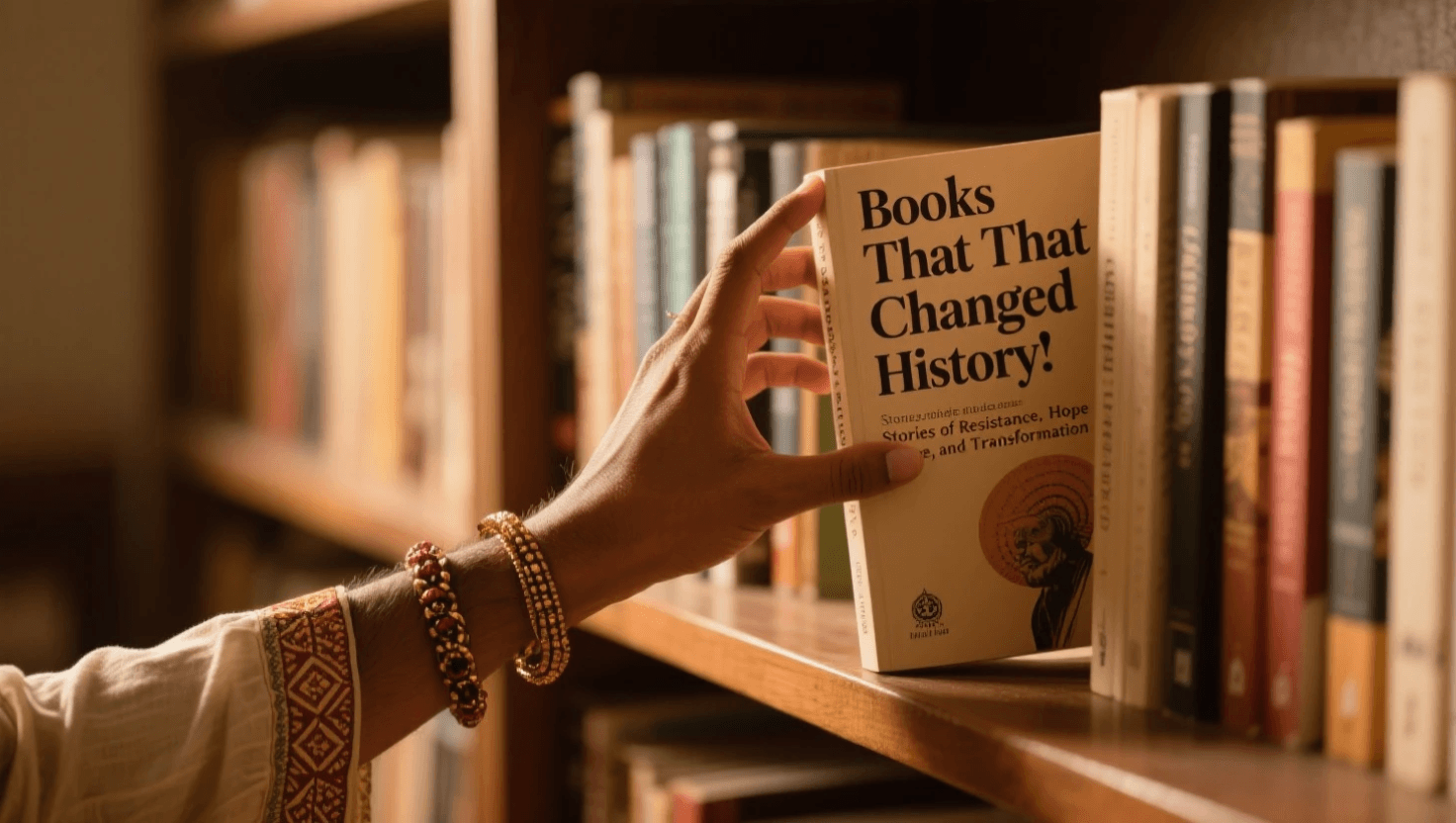
The past few years have produced some of the most discussed, dissected, and debated celebrity books in recent memory. From royals to pop stars to actors who've been in the public eye for decades, the stories that finally made it into print have consistently surprised – and sometimes shocked – audiences who thought they'd seen it all.
Why Celebrity Memoirs Hit Different Right Now
There's a specific cultural moment that explains why celebrity memoirs feel so charged right now. Social media gave fans the illusion of direct access to celebrities – the casual Instagram story, the candid tweet, the parasocial intimacy of seeing someone's apparent daily life. That closeness turned out to be curated, and audiences increasingly know it. A memoir, when it's honest, breaks through the curation in a way that no carefully managed social post can.
The books that generate the most conversation aren't the polished, PR-approved ones that read like an extended press release. They're the ones where the author clearly decided to say something real, regardless of the consequences. That decision – to tell the actual story – is what separates a memoir that trends for a week from one that people are still talking about years later.
There's also the question of timing. Celebrities tend to write their most revealing books when they've reached a point where the usual cost-benefit analysis of public disclosure has shifted – when protecting the narrative no longer feels worth it, when a relationship with a co-star or co-star-turned-nemesis has ended definitively, or when the distance of time makes talking about something survivable. The memoirs that arrive from that psychological place tend to be the most compelling.
The Memoirs That Changed the Conversation
Prince Harry – Spare (2023): Few books in recent memory generated more global coverage before a single reader had their hands on it. Spare was extraordinary in its willingness to detail the internal dynamics of the British Royal Family with a specificity that royal watchers had spent decades speculating about. The accounts of mental health struggles, the tensions with William and Kate, the description of physical altercations within the family – these were not the kind of carefully softened admissions typical of royal communications. The controversy it generated was enormous, but so was the readership: it became one of the fastest-selling non-fiction books in UK publishing history.
Britney Spears – The Woman in Me (2023): Coming after years of the #FreeBritney movement and the public reckoning with how the entertainment industry treated her during her conservatorship, Britney Spears' memoir landed at a moment of heightened audience readiness. The book's revelations – including an unplanned pregnancy during her relationship with Justin Timberlake – sparked immediate cultural discussion and renewed conversation about the power dynamics of fame, particularly for young women who became public property at the most vulnerable points of their lives. The memoir didn't read as a settlement of scores so much as a long-delayed right to tell her own story in her own words.
Matthew Perry – Friends, Lovers, and the Big Terrible Thing (2022): Published just over a year before Perry's death in October 2023, his memoir became one of the most heartbreaking celebrity books in recent memory in retrospect. At the time of publication, it was praised for its bluntness about addiction – Perry wrote about his dependency on opioids and alcohol with a specificity and lack of self-pity that stood out in the genre. His account of spending $9 million trying to get sober, the hospitalisations, and the years when the addiction was at its worst while Friends was at its peak – all while maintaining the cheerful public persona of Chandler Bing – was a portrait of a particular kind of private suffering that the celebrity machinery had completely obscured.
Viola Davis – Finding Me (2022): Davis's memoir covered her childhood in poverty in Rhode Island, the trauma she experienced as a child, and the long arc of her journey to becoming one of the most decorated actors of her generation. What distinguished it from a standard inspirational celebrity narrative was its unflinching examination of the specific ways that race, class, and gender shaped her experience of an industry that claimed to celebrate her while consistently underpaying and underestimating her. It was a book that connected the personal to the structural in ways that resonated well beyond entertainment audiences.
What Makes a Celebrity Memoir Actually Work
Not every celebrity memoir is worth the hype. For every book that genuinely reveals something, there are ten that are professionally competent, smoothly written, and ultimately tell you very little you didn't already know. The difference tends to come down to a few consistent factors.
The author's willingness to discuss failure matters enormously. Memoirs that dwell only on the climb – the auditions, the breakthrough, the awards, the gratitude – without honest engagement with the difficult parts feel false in a way readers immediately sense. The memoirs that connect are the ones where the author has clearly grappled with something hard and is willing to show the grappling, not just the resolution.
The specificity of detail is the other major factor. Vague acknowledgments of difficulty ("it was a dark time for me") produce a completely different reading experience than concrete, particular accounts that make the reader feel present. The best celebrity memoirs read less like polished narratives and more like someone actually telling you what happened, in the specific language of the specific moment.
Ghost-writing, which is common in the genre, isn't automatically a negative – plenty of excellent celebrity books were produced in collaboration. But the books that feel most authentic are the ones where the celebrity's actual voice comes through, even if a writer helped shape it. When the prose sounds like the verbal equivalent of a press release, the book loses the quality that makes celebrity memoir compelling in the first place.
The Backlash Is Part of the Story Too
A revealing celebrity memoir rarely arrives without controversy, and the controversy itself has become part of the cultural experience of the genre. Spare produced months of media coverage, Royal Family responses, and public debate. Britney's memoir revived discussion of her conservatorship in mainstream news outlets that had moved on. Matthew Perry's book prompted conversations about the gap between public persona and private reality that outlasted the initial review cycle.
Some celebrity subjects find themselves having to respond to memoirs written by people in their lives. Some push back through publicists. Some respond publicly on social media. The most interesting cases are when the subject of a memoir's revelations doesn't respond at all – leaving the account to stand unchallenged, which is often the loudest possible response.
The backlash to celebrity memoir is sometimes genuine controversy – accusations of inaccuracy, claims of betrayal from people mentioned – and sometimes just the predictable machine of celebrity news generating heat around a high-profile release. Readers who enjoy the genre have developed a reasonable sense of which controversies are substantive and which are manufactured noise.
What's Coming and Why It Matters
The celebrity memoir market shows no signs of cooling. If anything, the success of recent high-profile books has reinforced to publishers and agents that audiences genuinely want the real story, not the managed version. The books that are announced with the most attention tend to be the ones where the subject has clearly decided to stop protecting something – a relationship, a reputation, an industry relationship – and is willing to tell the story that's actually there.
For fans, celebrity memoirs offer something that no other format does: an extended, intimate account of a famous life told in its own terms, without the mediation of an interviewer, a publicist, or a camera crew. When that account is honest, it's among the most compelling reading in popular culture. When it isn't – when it's careful and managed and says nothing you couldn't have guessed – it disappears quickly. The genre rewards honesty in a way that few others do, which is why the memoirs worth reading are always the ones someone was warned not to write.
📚 Sources
The Guardian – Spare by Prince Harry review: https://www.theguardian.com/books/2023/jan/05/spare-by-prince-harry-review
The New York Times – The Woman in Me by Britney Spears review: https://www.nytimes.com/2023/10/24/books/review/britney-spears-the-woman-in-me.html
The Atlantic – Matthew Perry memoir Friends, Lovers, and the Big Terrible Thing: https://www.theatlantic.com/books/archive/2022/11/matthew-perry-memoir-friends-addiction/672092/
NPR – Viola Davis Finding Me review: https://www.npr.org/2022/04/25/1094445083/viola-davis-memoir-finding-me
Publishers Weekly – Celebrity memoir trends in publishing: https://www.publishersweekly.com/pw/by-topic/industry-news/book-deals/article/90965-celebrity-memoirs.html